Roof replacement only
Resolve roofing material, weatherproofing, structure and access. Generation can be deferred where solar is unsuitable.
Resolving the Nexen view…

 Find my system
 SOLAR ROOFING / BUILDING + ENERGY
Compare the building envelope and the energy system together. A full reroof or new build opens options that a panel-only quote can miss.
Estimate my solar roof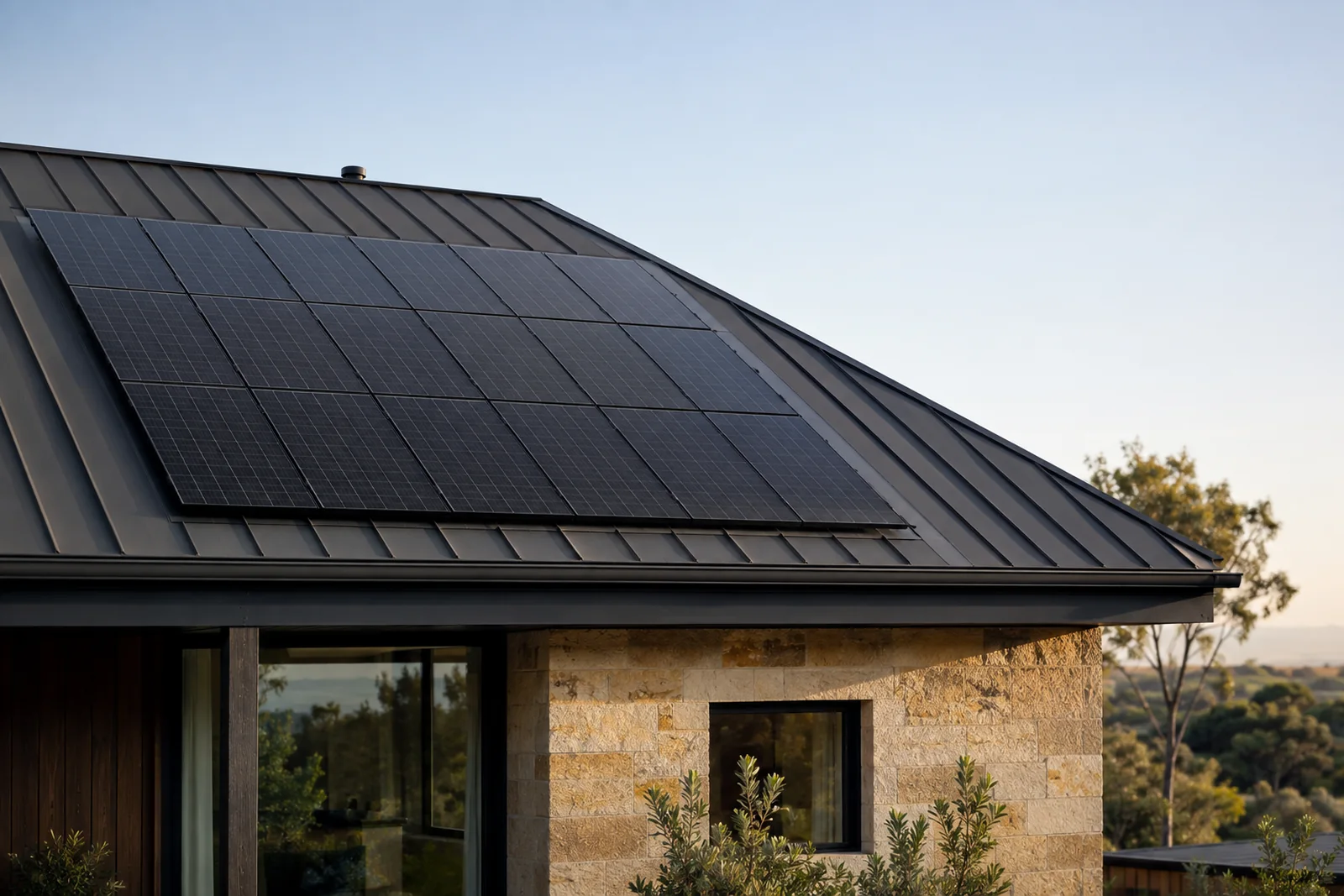
THREE DISTINCT PATHS
Resolve roofing material, weatherproofing, structure and access. Generation can be deferred where solar is unsuitable.
Coordinate the reroof and a conventional array. Flexible placement and replacement often support the strongest capacity and value.
PV elements form part of the finished roof. Best assessed during a new build or full reroof where architecture matters.
WHAT CHANGES ON THE ROOF
The roof covering provides weather protection. Solar generation is a separate future decision.
An array sits above the finished roof on a mounting system. The roof remains the weather barrier.
Active PV elements form part of the roof finish. The complete assembly must resolve water, electrical and replacement access.
Your written scope should name who owns roofing and waterproofing, PV and electrical work, manufacturer warranties, workmanship, and access for future replacement. Integrated roofing needs all of these resolved together.
Inputs, assumptions and inspection items remain separate. The result is deliberately a range—not a construction quotation.
Roof removal, selected finish and a broad access/complexity allowance. No solar generation included.
Indicative roof replacement plus approximately 15.6 kW of conventional rooftop solar and electrical integration.
Screening range for an active roof area supporting approximately 11.8 kW. Product availability and roof architecture must be verified.
Customer inputs: postcode, roof area, material, condition, access, pitch, geometry, energy bill and preferences.
Screening allowances: roof replacement uses $0–$0 per m² before condition, access, pitch and geometry factors. Integrated active roofing uses a broad $500–$1,000 per m² allowance. Conventional solar uses $1,000–$2,000 per kW plus electrical allowances.
Calculated: usable roof share, indicative PV capacity, generation and three project ranges. Generation uses the CER postcode zone as a broad yield proxy.
Site inspection required: measured roof geometry, structure, waterproofing, hazardous materials, heritage/bushfire constraints, access, scaffold, drainage, switchboard, network approval, product availability and warranty interfaces.
Nexen verifies the surface, usable solar zones, roof/electrical interface and the two pathways before issuing a project-specific design.
Conventional modules generally provide more watts from a smaller usable area. Integrated capacity depends on active roof coverage, orientation and shade.
Integrated roofing commonly carries a material and coordination premium. Assess it alongside roof replacement costs, access and future service work.
Document roofing, membrane, drainage, waterproofing, PV, inverter and workmanship responsibilities separately within the coordinated scope.
Resolve isolation, replacement access, batteries, EV charging, monitoring and network interfaces before installation.
Nexen assesses, engineers, prepares, installs, commissions and supports the coordinated roofing and electrical project.