Use more solar on site
Match array and storage capacity to daytime surplus and evening demand.
Resolving the Nexen view…

 Find my system
 SOLAR + BATTERY / ONE COORDINATED DESIGN
Solar and storage work best when they are sized together around the home’s actual demand, export limit, evening use and backup priorities. Nexen models the complete system before recommending equipment.
Design my solar + battery system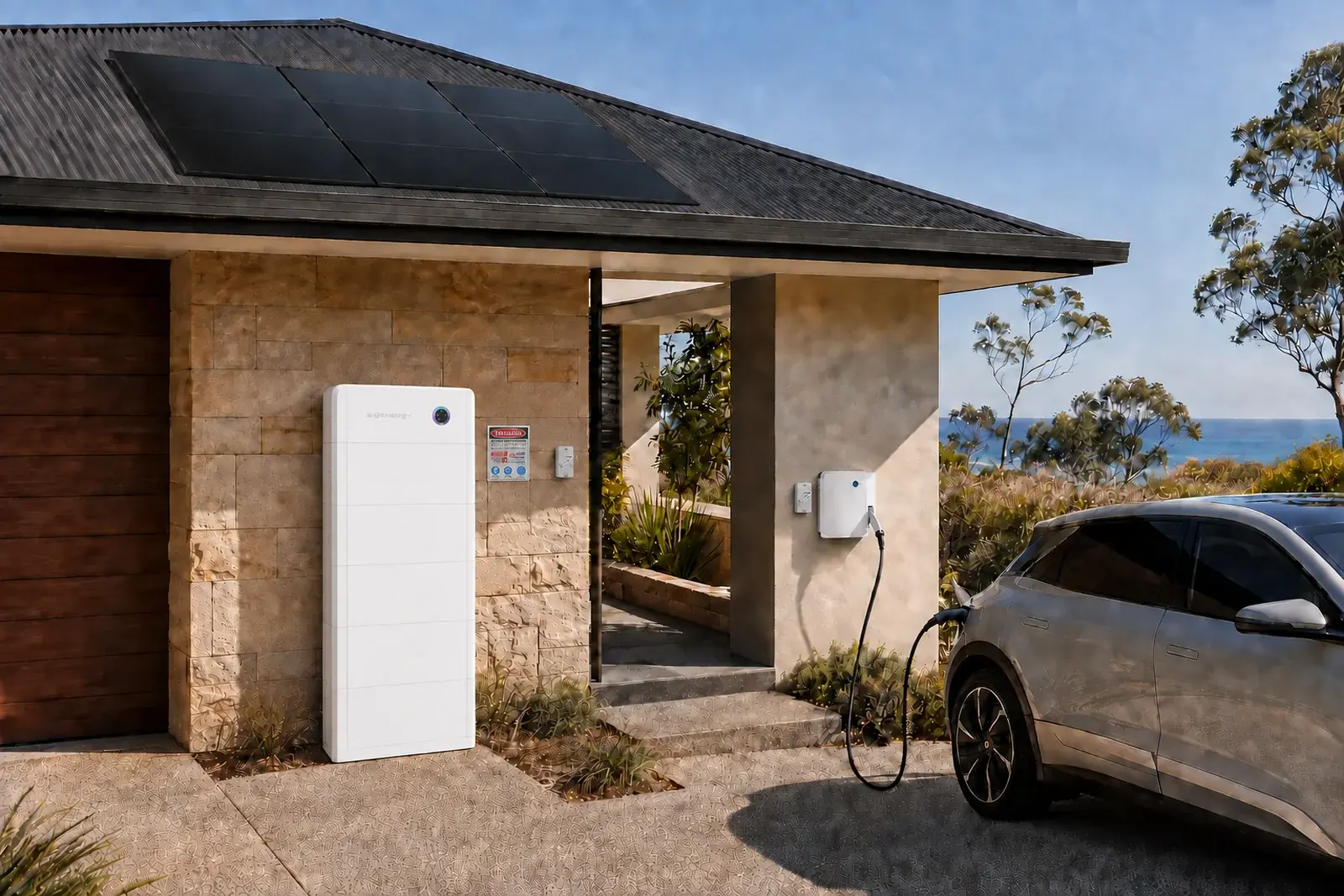
WHAT CHANGES FOR YOU
Match array and storage capacity to daytime surplus and evening demand.
Test storage against the tariff and household routine rather than a generic package.
Define priority circuits, reserve and power limits before treating backup as included.
YOUR OPTIONS
There is usable roof area, evening demand and a meaningful tariff spread.
CHECK BEFORE COMMITTINGLow self-consumption, export constraints and optimistic growth assumptions.
Selected circuits need continuity and stored solar also has everyday value.
CHECK BEFORE COMMITTINGGateway scope, battery power, reserve settings and supply phase.
An EV, heat pump or other major load is planned.
CHECK BEFORE COMMITTINGLoad timing, switchboard capacity and staged expansion compatibility.
BEFORE YOU DECIDE
Annual use, interval timing, roof area, export rules and planned loads determine a sensible starting range.
The result depends on solar used on site, stored energy, tariffs, losses, installed cost and future consumption.
Controller, battery, gateway, phase and monitoring compatibility are verified in the written design.
QUESTIONS & ANSWERS
No. Nexen compares the extra stored-energy value and backup objective with the additional installed cost.
Some platforms support modular expansion within product, timing and warranty rules. The intended expansion path should be documented before installation.
Solar and battery certificate estimates are separated, eligibility-gated and confirmed against current rules before proposal.